
History of Polonnaruwa:
Polonnaruwa is one of Sri Lanka’s most magnificent ancient cities and a UNESCO World Heritage Site. It served as the island’s second capital after the decline of Anuradhapura, rising to prominence between the 11th and 13th centuries CE. Known for its well-preserved ruins, advanced city planning, and artistic achievements, Polonnaruwa remains a stunning symbol of Sri Lanka’s golden age of civilization.
Kingdom of Polonnaruwa (11th–13th Century CE):
Following the fall of Anuradhapura, the Sinhalese rulers shifted their capital eastward to Polonnaruwa — a region that was more secure and strategically located. The kingdom began to flourish under King Vijayabahu I (1055–1110 CE), who expelled South Indian invaders and restored stability to the country.
However, it was King Parakramabahu I (1153–1186 CE) who transformed Polonnaruwa into one of the most advanced urban centers of the ancient world. His reign marked the height of Sri Lankan prosperity and cultural development. Parakramabahu famously declared,
“Not even a drop of water that falls from the heavens shall be allowed to reach the sea without first serving mankind.”
This philosophy inspired the creation of vast irrigation networks that continue to astonish engineers to this day.
Later, under King Nissanka Malla (1187–1196 CE), Polonnaruwa experienced continued artistic and architectural refinement. However, by the late 13th century, the kingdom began to decline due to invasions and internal struggles, leading to its eventual abandonment.
Architectural & Cultural Legacy:
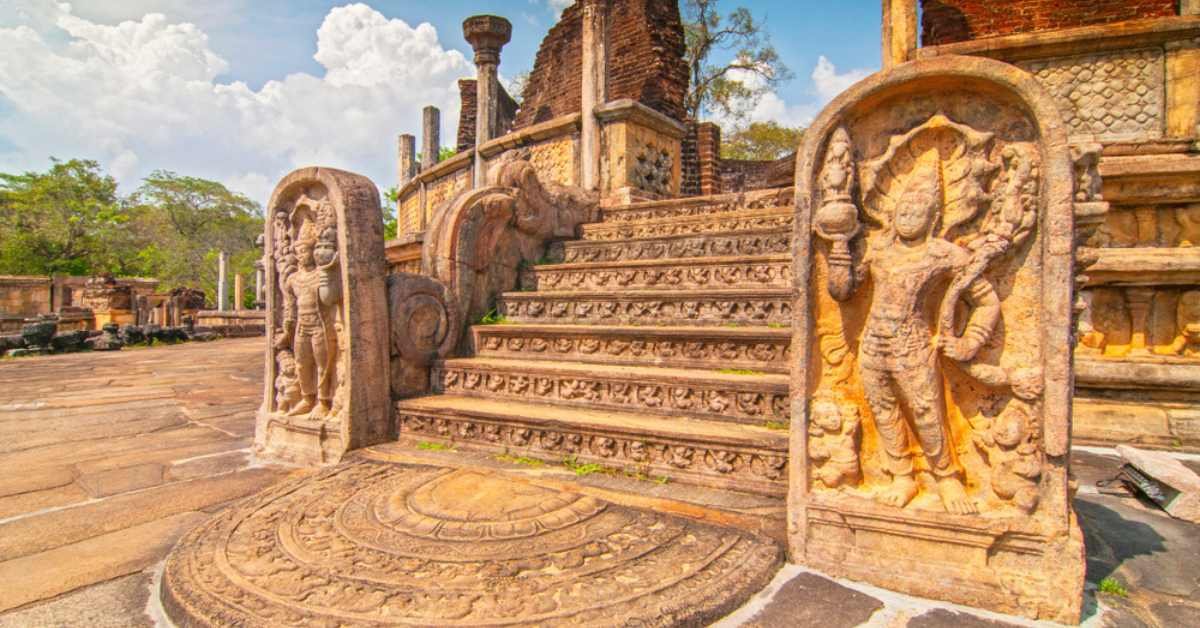
Polonnaruwa represents the perfect blend of religious devotion, artistic expression, and engineering excellence. The ancient city was meticulously planned — featuring royal palaces, Buddhist monasteries, Hindu shrines, and colossal statues carved from granite.
Its ruins remain some of the best-preserved in Asia, offering a clear glimpse into the grandeur of Sri Lanka’s medieval era.
Irrigation and the Parakrama Samudra:
One of Polonnaruwa’s most impressive achievements is the Parakrama Samudra (Sea of Parakrama) — a vast reservoir constructed under King Parakramabahu I. This massive artificial lake, covering over 2,500 hectares, was designed to sustain agriculture year-round.
It symbolizes the kingdom’s mastery of water management and remains a vital part of the region’s irrigation system even today.
Religious Harmony and Artistic Brilliance:
Polonnaruwa was a city of religious diversity and artistic excellence. The rulers supported Buddhism, Hinduism, and other faiths, building shrines and temples side by side. The city’s architecture, sculptures, and murals reflect this harmony — blending South Indian influence with native Sinhalese artistry.
The Gal Vihara — an ensemble of colossal rock-cut Buddha statues — stands as the finest example of Polonnaruwa’s artistic mastery. These statues, carved into a single granite rock face, depict the Buddha in meditation, standing, and reclining postures, radiating serenity and perfection.
What to Do in Polonnaruwa:
1. Explore the Ancient Royal Palace Complex
The Royal Palace built by King Parakramabahu once stood as a seven-storied marvel of architecture.
What to Do Here:
-
Walk through the remains of the palace’s towering brick walls and halls.
-
Visit the Audience Hall, adorned with intricate lion carvings and stone pillars.
-
Imagine the grandeur of royal life during Polonnaruwa’s golden age.
2. Visit the Quadrangle (Dalada Maluwa)
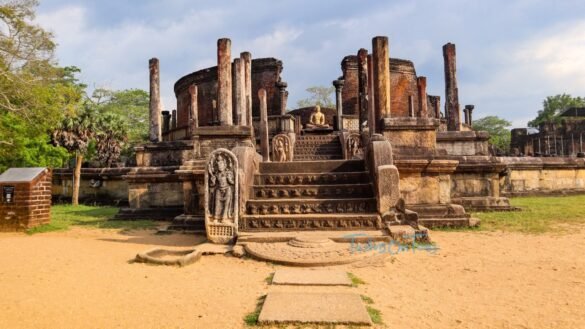
This compact area is the spiritual heart of Polonnaruwa, filled with sacred monuments and relic shrines.
What to Do Here:
-
See the Vatadage, a circular relic house with beautifully carved stone steps.
-
Visit the Hatadage and Atadage, ancient shrines that once held the Tooth Relic of the Buddha.
-
Admire the Gal Potha (Stone Book) — a massive stone slab inscribed with King Nissanka Malla’s achievements.
3. Marvel at Gal Vihara
Perhaps the most iconic site in Polonnaruwa, the Gal Vihara features four immense Buddha statues carved into a granite cliff.
What to Do Here:
-
Observe the details of the seated, standing, and reclining Buddhas — masterpieces of ancient craftsmanship.
-
Visit during sunrise or sunset for the most atmospheric lighting.
-
Learn about the symbolism behind each posture of the Buddha.
4. See the Rankoth Vehera and Lankatilaka Vihara
Two monumental religious structures that showcase the grandeur of Polonnaruwa’s Buddhist architecture.
What to Do Here:
-
Visit Rankoth Vehera, one of the largest stupas in Sri Lanka, built by King Nissanka Malla.
-
Explore Lankatilaka Vihara, a towering temple with massive Buddha statues and tall walls that still inspire awe.
-
Enjoy the quiet serenity of these sacred spaces amidst the ancient ruins.
5. Visit the Shiva Devales
Reflecting the city’s religious diversity, the Shiva Devales are among the oldest structures in Polonnaruwa.
What to Do Here:
-
Observe the South Indian architectural influence in the stone carvings.
-
Visit both Shiva Devale No. 1 and No. 2, dedicated to Lord Shiva.
-
Appreciate the coexistence of Buddhist and Hindu monuments within the same ancient city.
6. Tour the Parakrama Samudra
Known as the “Sea of Parakrama,” this vast reservoir dominates the Polonnaruwa landscape.
What to Do Here:
-
Take a walk along the bund for breathtaking views of the lake and surrounding countryside.
-
Watch local fishermen and spot migratory birds in the wetlands.
-
Visit during sunrise for an ethereal reflection of the sky on the calm waters.
7. Visit the Archaeological Museum of Polonnaruwa
Before exploring the ruins, stop by the museum to gain a deeper understanding of the city’s history.
What to Do Here:
-
View sculptures, coins, pottery, and ancient tools found during excavations.
-
Learn about the city’s urban planning and architectural evolution.
-
See detailed models reconstructing what Polonnaruwa looked like in its prime.
8. Cycle Around the Ruins
Polonnaruwa’s archaeological park covers a vast area, and cycling is the most enjoyable way to explore it.
What to Do Here:
-
Rent a bicycle near the museum or site entrance.
-
Follow marked routes through lush greenery and historic ruins.
-
Stop at local juice stalls for coconut water and fresh fruit between sites.
Best Time to Visit Polonnaruwa:
The best time to visit Polonnaruwa is from May to September, during the dry season, when weather conditions are ideal for sightseeing and cycling around the ruins. Early mornings and late afternoons offer cooler temperatures and soft golden light, perfect for photography.
If you visit in June, you can also witness the Poson Poya celebrations, when Buddhist pilgrims gather across the ancient capitals — especially Anuradhapura and Polonnaruwa — to commemorate the introduction of Buddhism to Sri Lanka.